Contrast is remapped
Tones are redistributed for the human eye, so mid-tones stay distinct instead of turning grey.

Ink, not light. A surface that is read, never one that shines at you.
ePaper, also called electronic ink or e-ink, is a display technology that holds an image with pigment rather than light.
How it works
One row of them.
Under each pixel, a capsule of ink: black pigments, white pigments.
A signal moves the pigments. Then they stay, with no power at all.
Look closer: pixels, each set to one of sixteen greys.
Non-emissive by nature
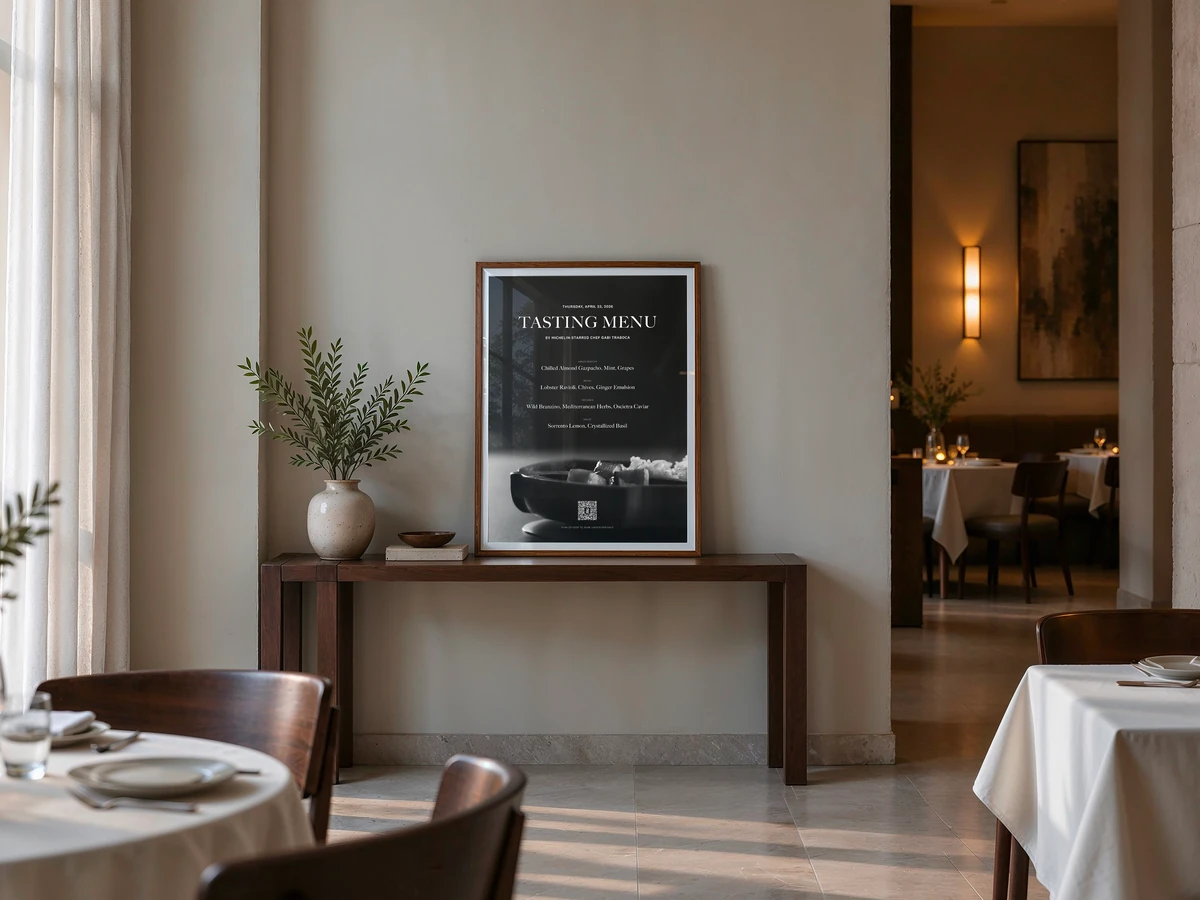
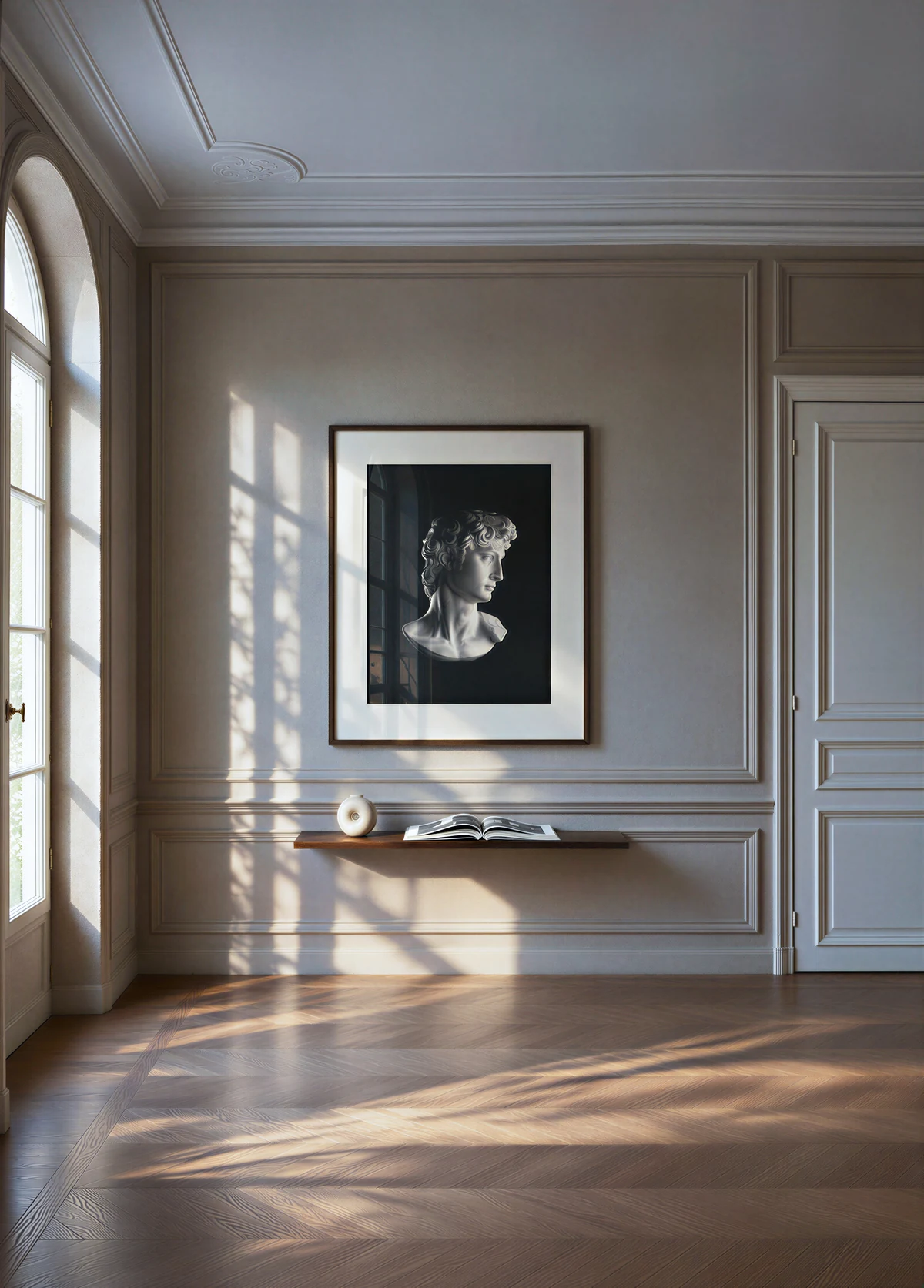
What you see is not light pushed towards your eyes, as it is on an LED panel. It is the light already in the room, returned by pigment that has just been rearranged in silence. The result is a surface that is soft on the eyes and holds its image from any angle, and that reads on a wall the way a framed print reads.
An emissive panel burns power every second to produce its light. ePaper works the other way around: the ink moves into place, then stays there. Power is drawn only when the image changes, and that is what makes a frame with no cable possible.
Up to 3 years
Autonomy
99.9 %
Less energy
3 hours
Full charge
Zero
Power when static
Autonomy based on typical use. It varies with the number of image changes, ambient temperature and active hours. Energy reduction compared with a 42-inch LCD display operating 12 hours a day.
Day and night
At midnight the image is still on the wall, held by the ink alone. With no light of its own, the frame goes dark with the rest of the room, the way a framed print does.
14:00By day, the ink returns the light of the room.


23:30By night, nothing glows. The image stays, and keeping it there costs no energy.
An honest comparison
ePaper is not better at everything. It is better at being quiet.
| Criterion | Framed print | LCD / OLED | Ginko ePaper |
|---|---|---|---|
| Light emission | None | Continuous, emissive | None, reflective |
| Power draw | None | Continuous | Only when the image changes |
| Cabling | None | Power and data | None, Wi-Fi and battery |
| Remote update | Reprint and reinstall | Yes | Yes, fleet-wide |
| Eye comfort | Paper | Glare, and always emissive | Paper-like, 180° |
| Moving image | No | Yes | No |
| Full colour | Yes | Yes | Greyscale |
| Architectural integration | Reads as a framed work | Reads as a device | Reads as a framed work |
What we made of it
Ginko puts that ink in a frame a framer would recognise, adds a battery and a Wi-Fi link, and nothing else: a display that hangs like a picture and changes like a screen. Here is what is inside, and what it took.
Laying ink on a surface is an old gesture, and one of the few that changed how knowledge travels. We are extending it, and giving it the one thing it never had: the ability to change.
Inside
The invisible work
Sixteen levels of grey are the difference between a pictogram and a photograph: the fall of light on a face, the grain of a fabric, a sky at dusk. And with no backlight, the image holds at any angle, like a print.
An image is never sent to the panel as it arrives. It is rebuilt for it.
Tones are redistributed for the human eye, so mid-tones stay distinct instead of turning grey.
Dithering spreads the pigment so the eye rebuilds gradients, grain and softness.
Each image is corrected to the exact response curve of the panel that will show it.
The same image looks identical in a lobby in Paris and in a suite in Marrakech.
Eco-design
Made of what a framer would use: solid wood, real glass and a white mat. The most sustainable object is the one you keep. The image changes, the frame stays on the wall.
< 1 %
Plastic in the object
90 %
Recyclable
Solid wood
Frame finished by hand
Zero
Construction waste
The frames
Ginko Studio
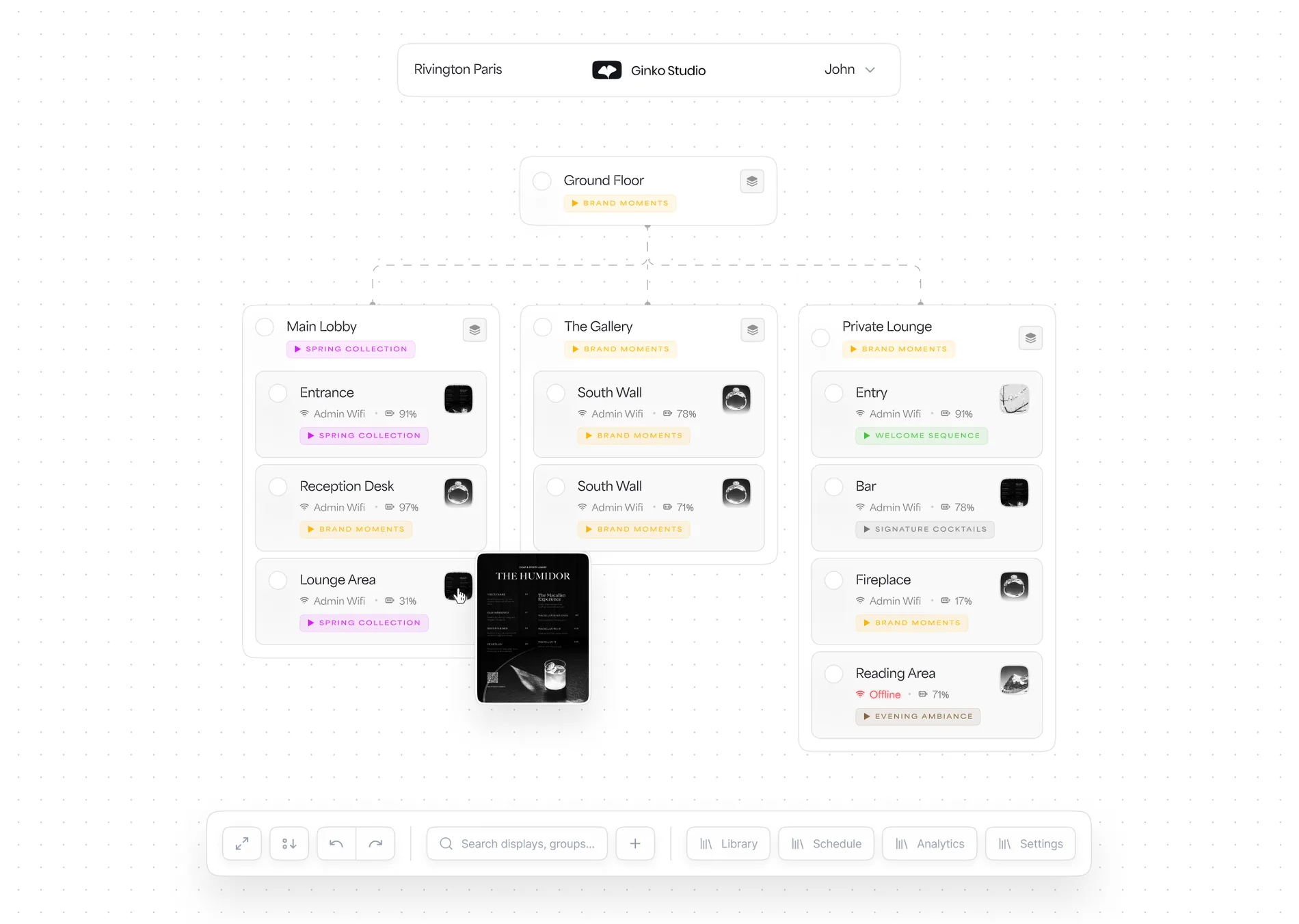
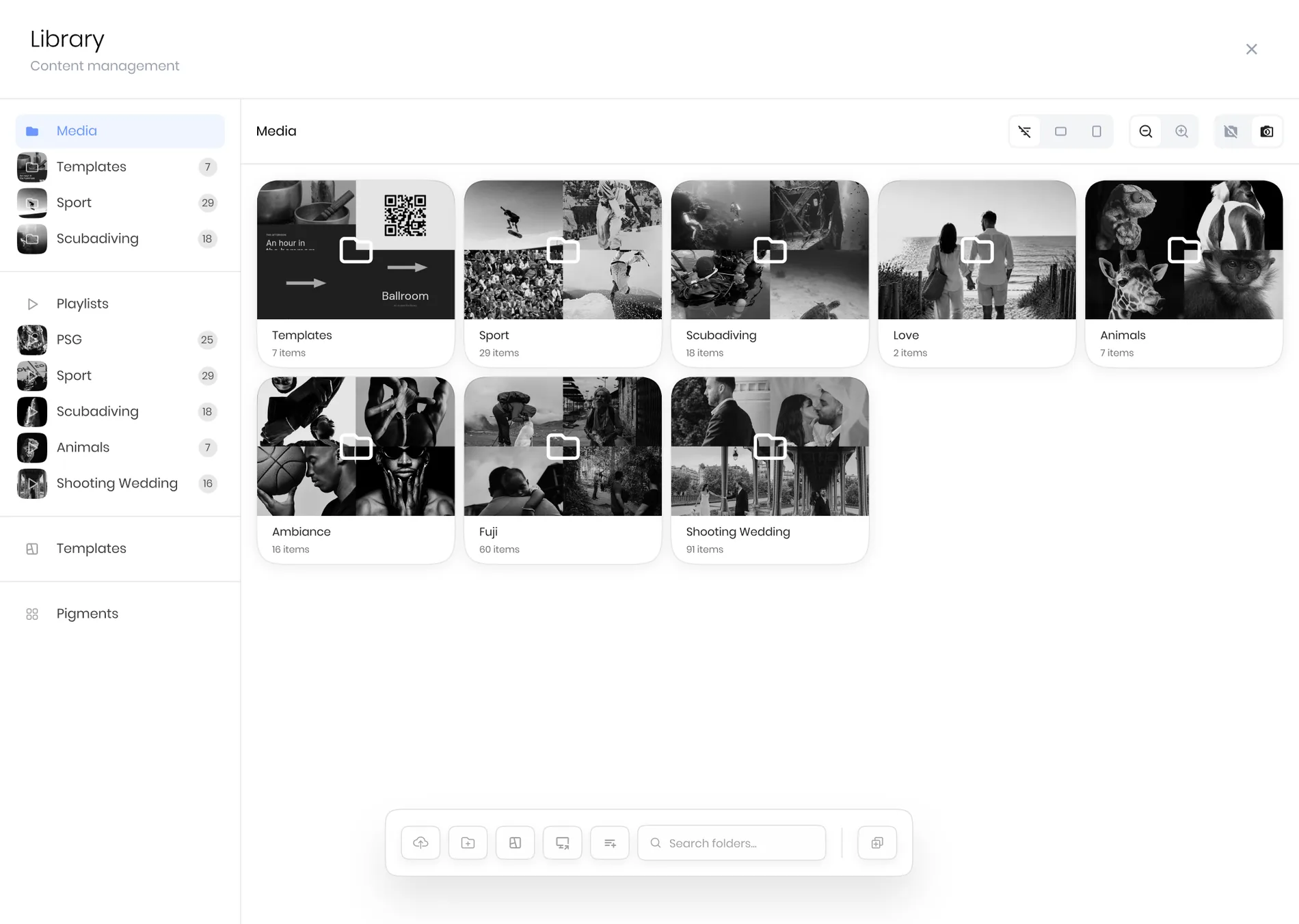
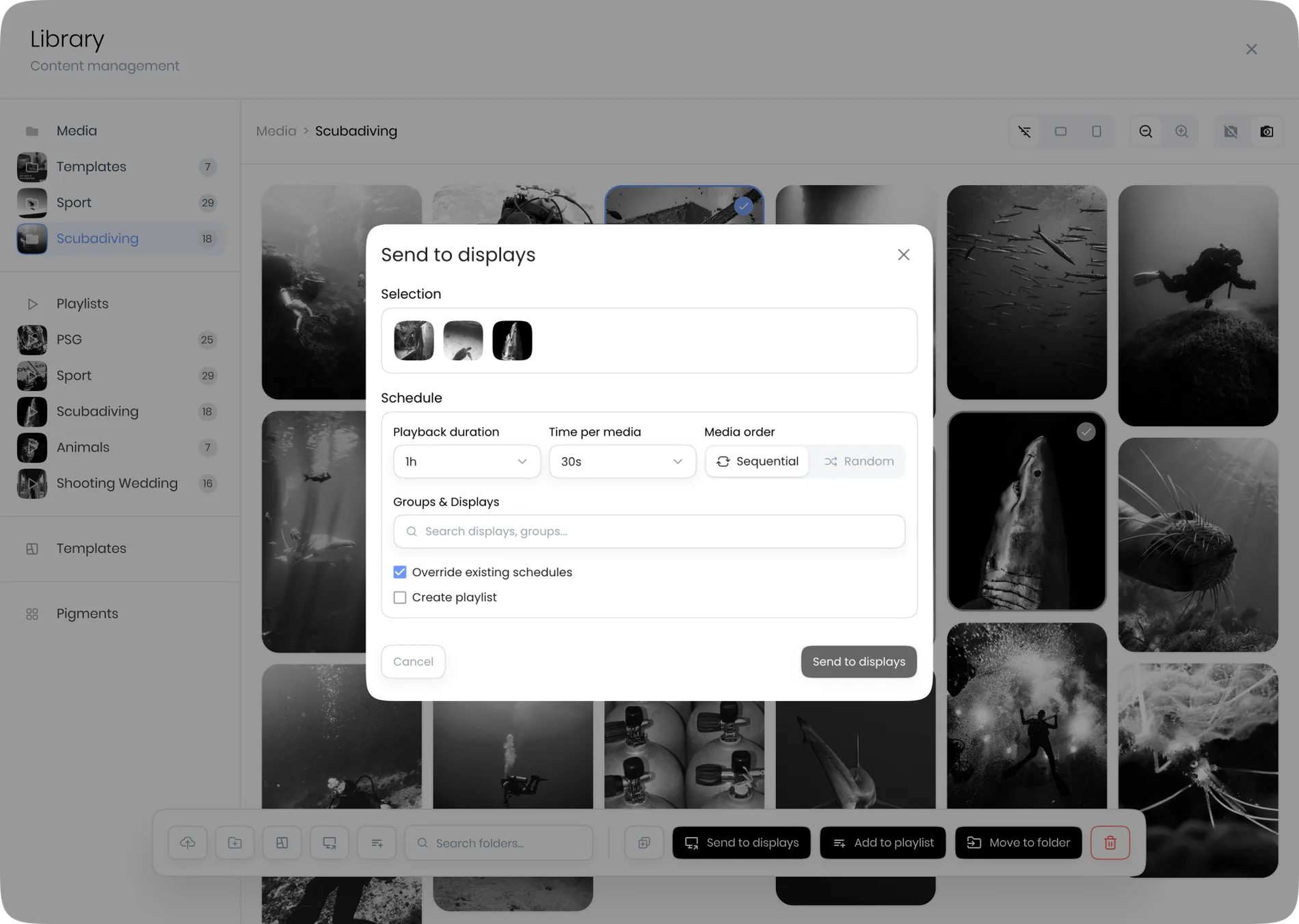
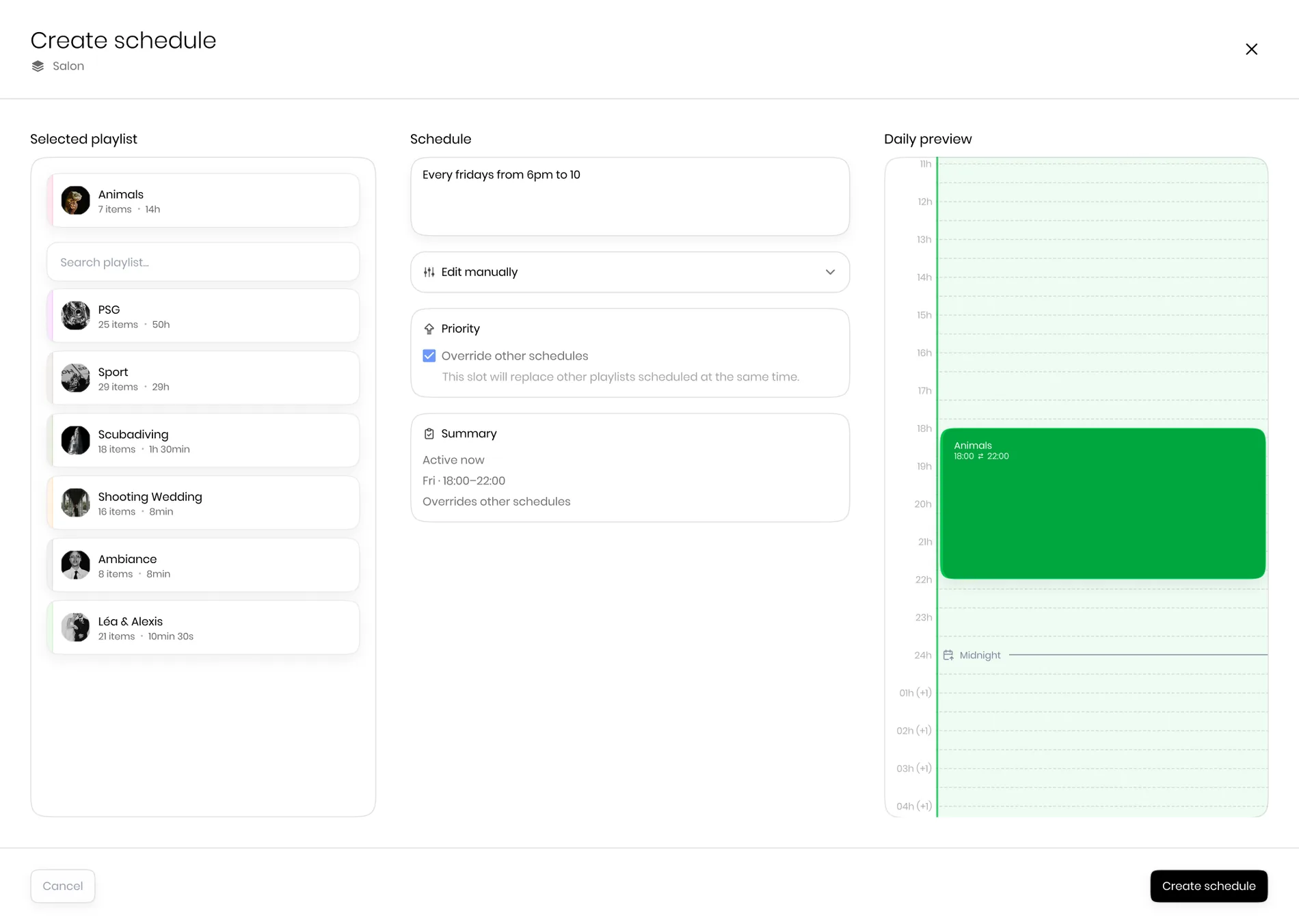
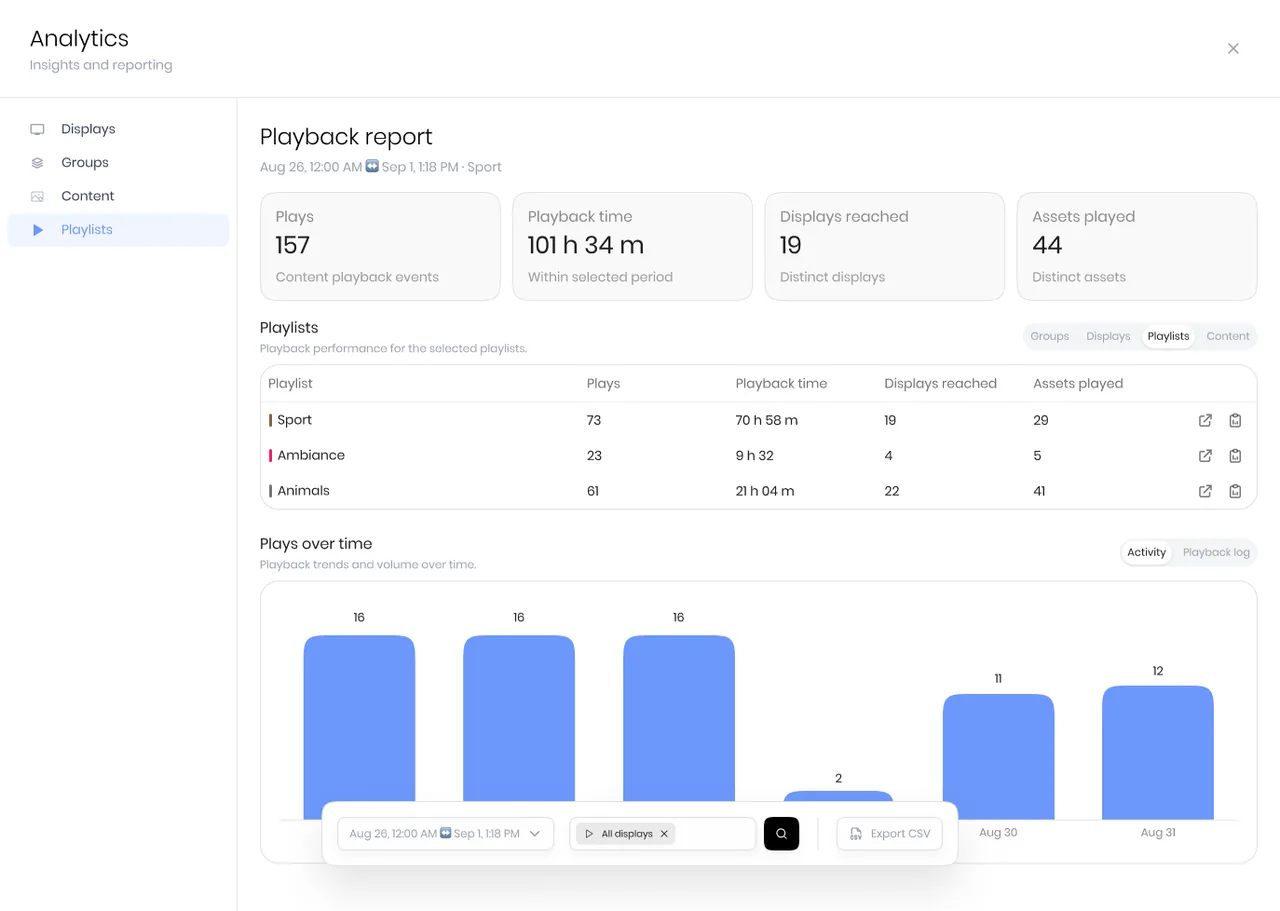
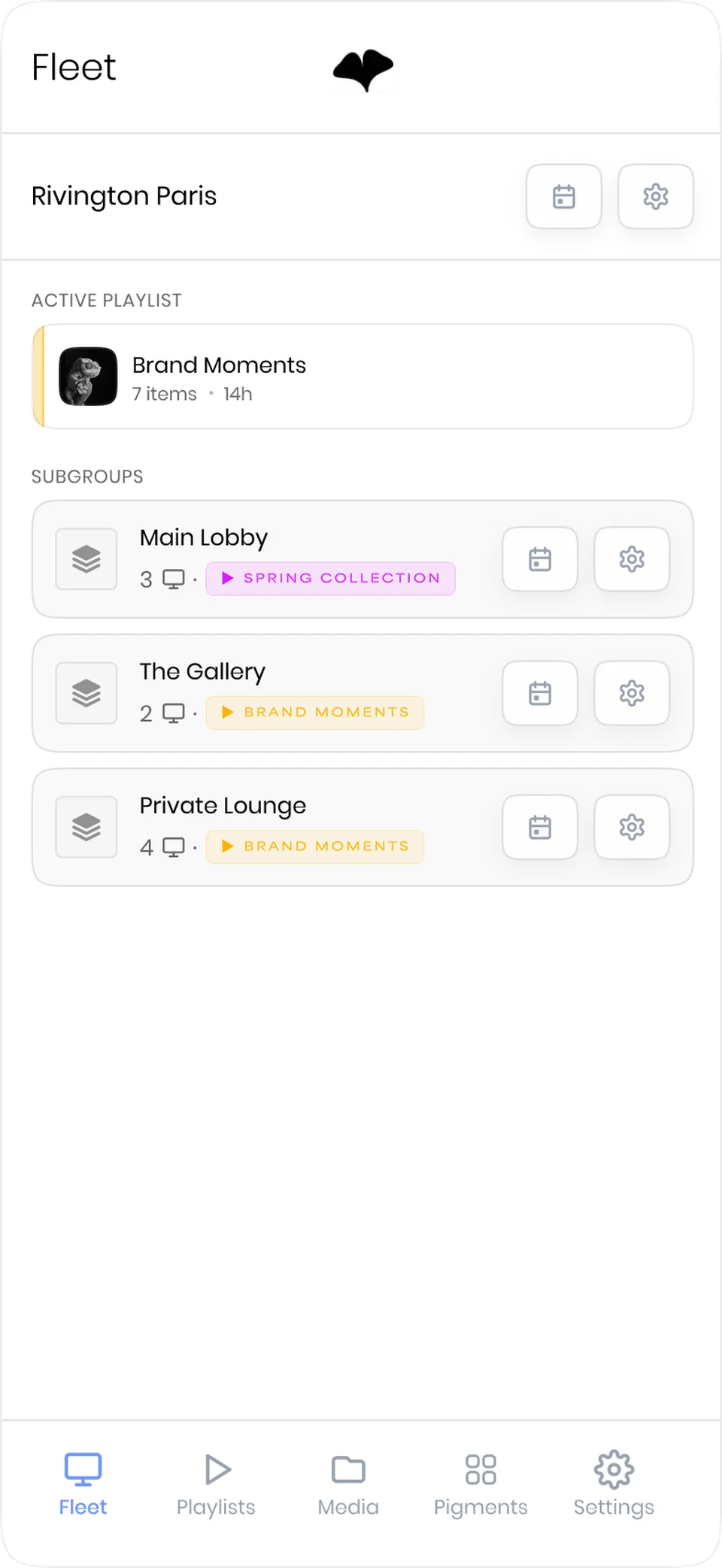
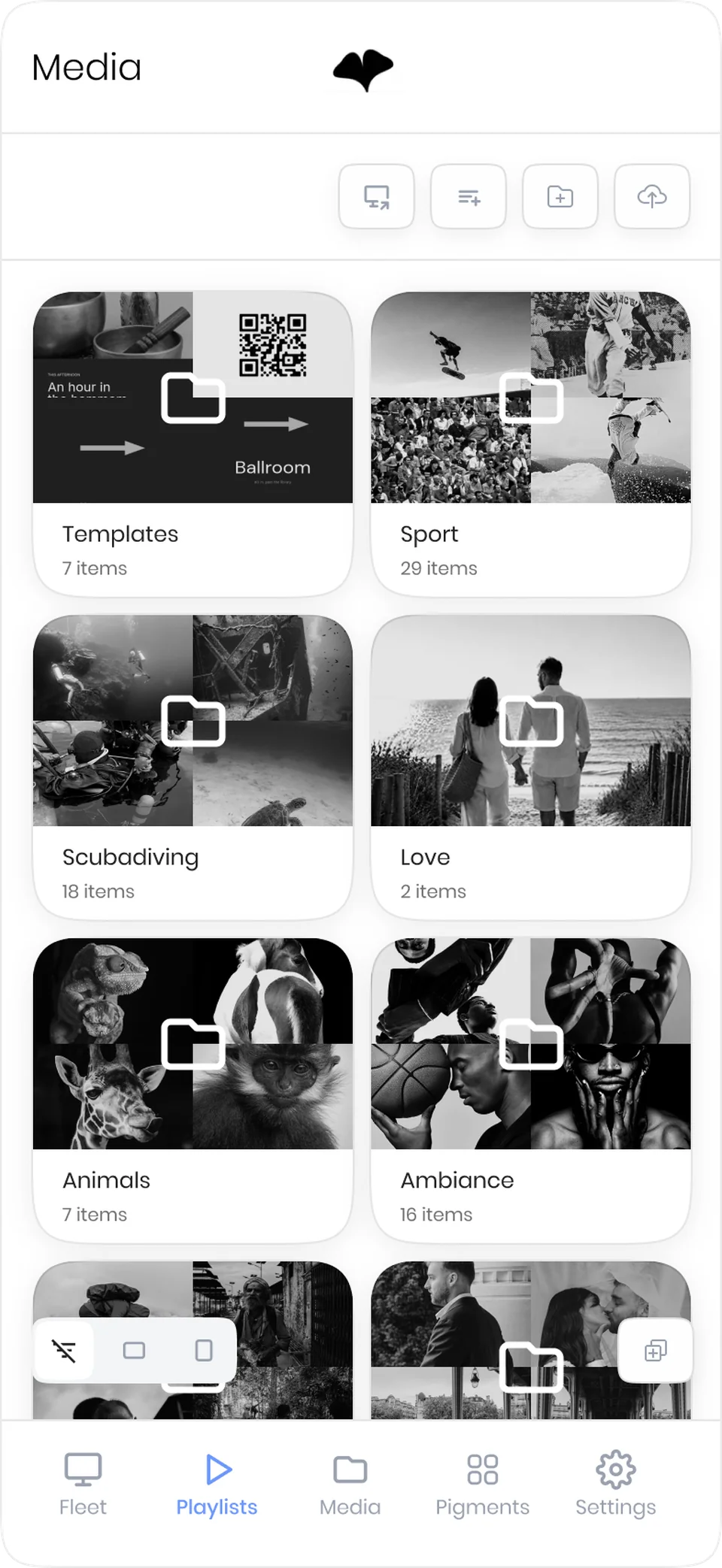
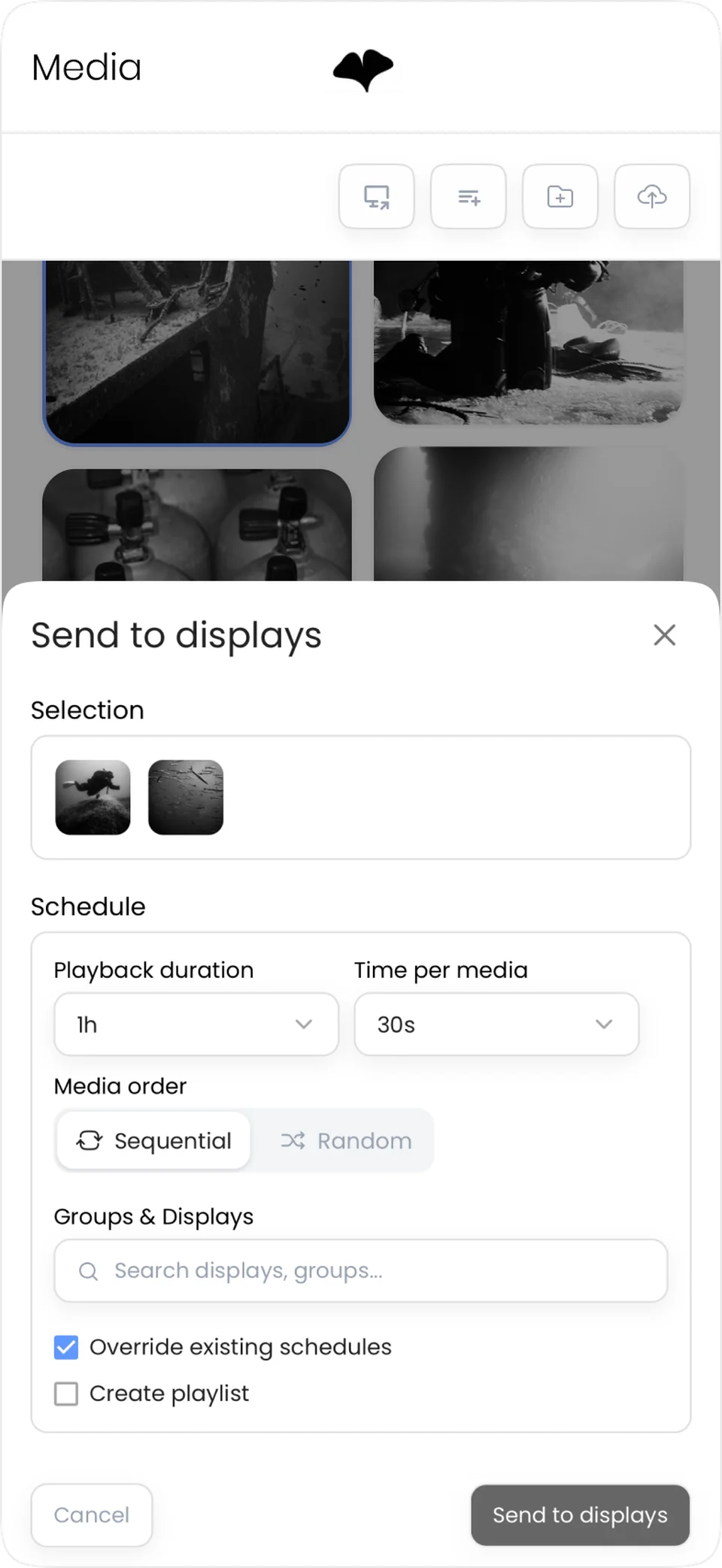
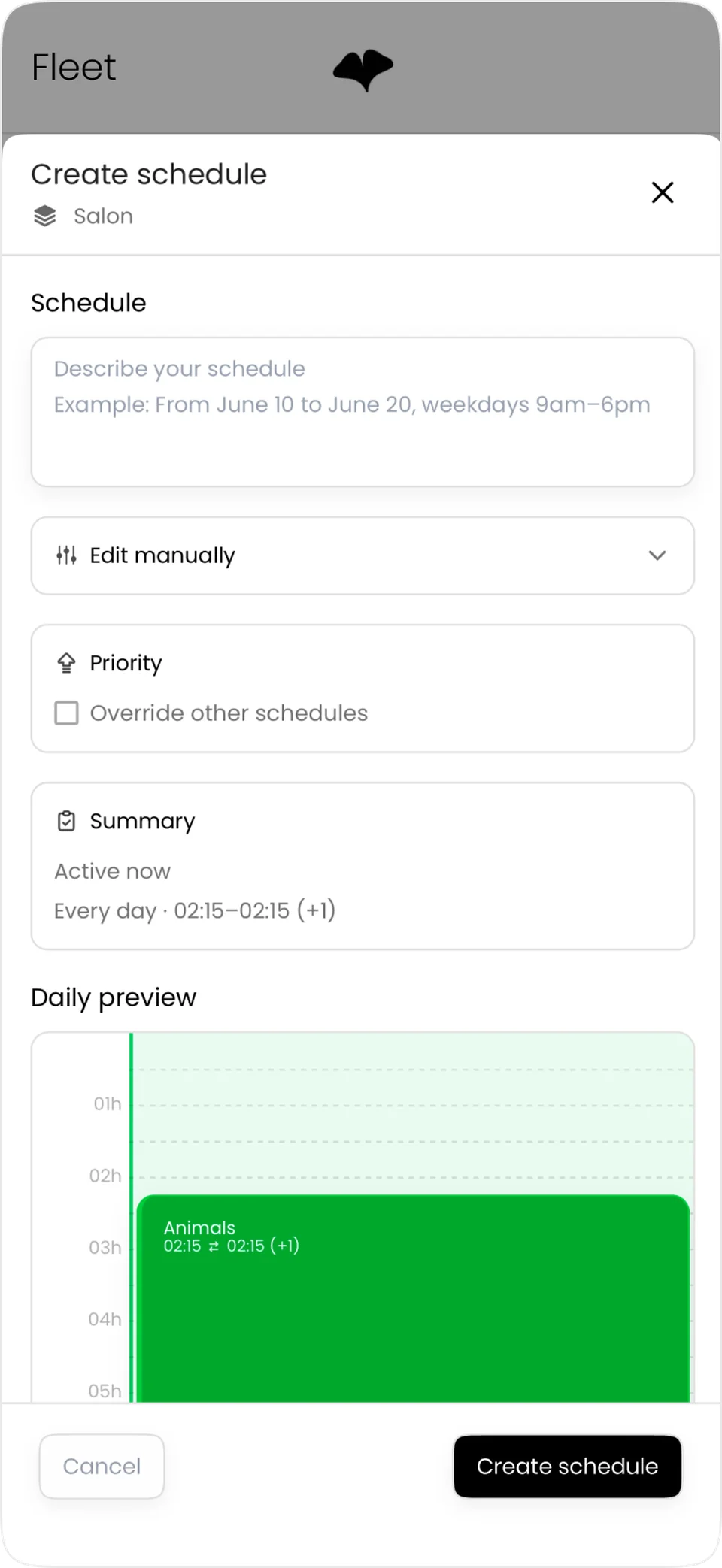
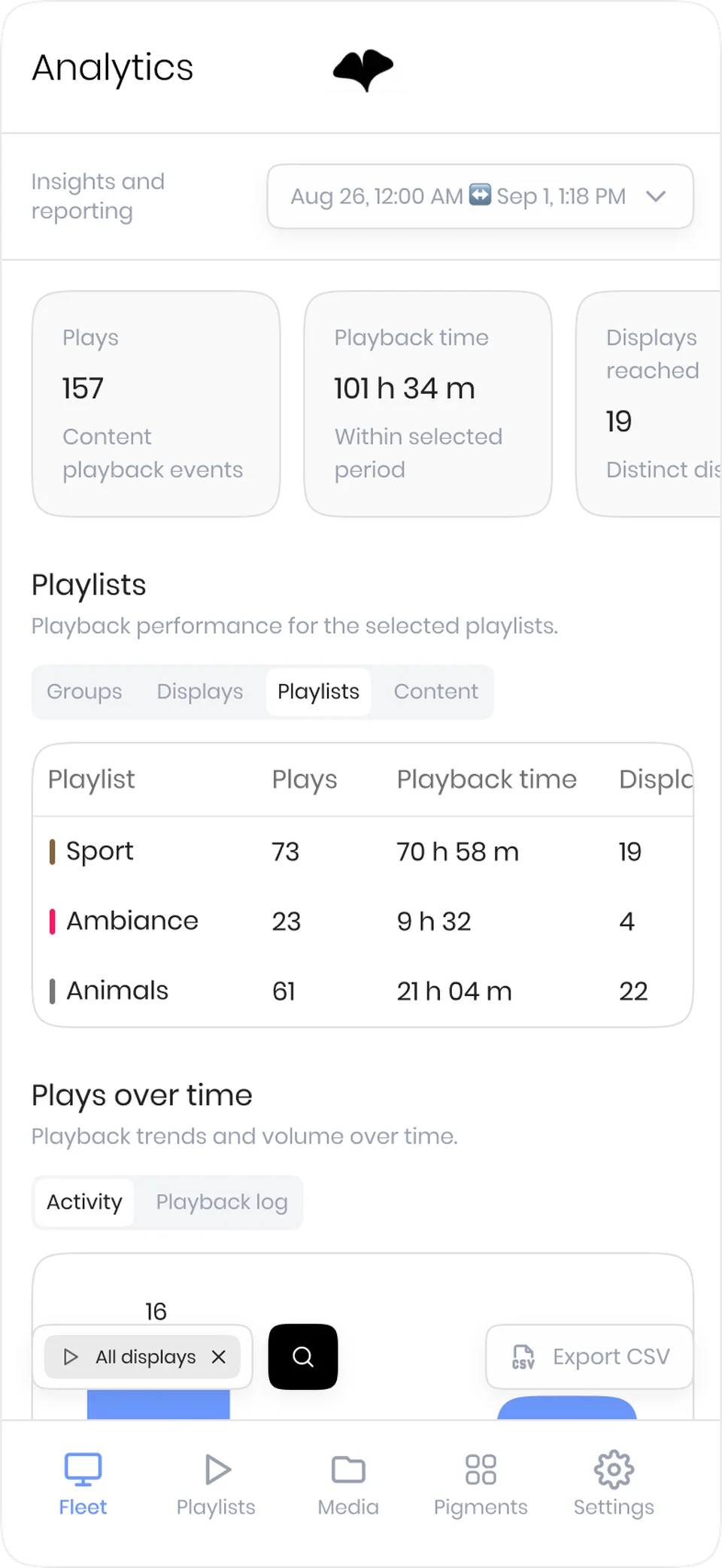
From your desktop or from your phone, Ginko Studio turns running a fleet of frames into a simple routine.